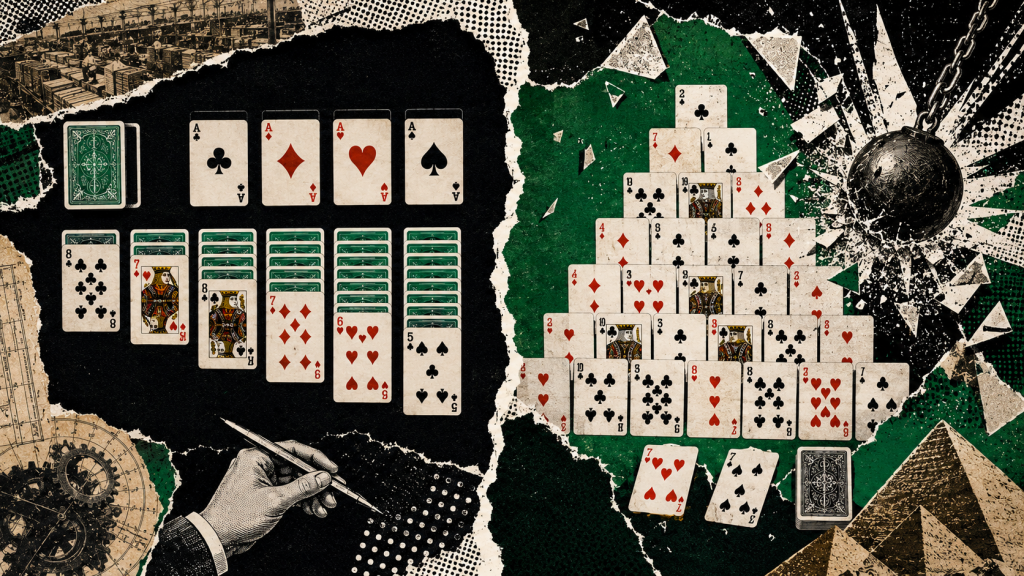
Draw one Klondike feels straightforward. Turn a card, see whether it helps, make your move, and keep going. Draw three changes the whole mood. It lets you see more cards at once, but most of them sit out of reach behind the top card.
That one rule changes the rhythm of the game. The tableau may look the same, but the stock starts behaving like a different puzzle.
That is why win-rate talk gets muddy when people skip the draw rule. Klondike already has hidden-card pressure. Changing stock access adds another layer.
I get suspicious whenever a strategy tip says always or never without naming the draw rule. A move that looks harmless in draw one can cost you in draw three. The waste pile has a memory.
Draw One Gives You Cleaner Access
In draw one, each stock card gets a turn on top of the waste. You can use it if the tableau or foundation allows. With unlimited passes, the game becomes forgiving enough that many digital players treat it as the easier version.
That does not make every deal simple. Buried tableau cards still matter. Empty columns still decide games. A blocked king can still jam the whole layout.
Still, draw one gives the player a calmer relationship with the stock. You know the next card will actually become available. That small promise changes how bold you can be with tableau moves.
It also makes undo feel less dramatic in apps. You can walk a move back, check the next card, and act like it was part of the plan. A physical deck gives you fewer chances to clean up your thinking after the fact.
Draw Three Makes Timing Touchy
Draw three creates small windows. The top waste card can move. The two behind it have to wait for the right pass or the right removal. Play the top card, and a new card becomes available. Leave it there, and the cards underneath stay blocked.
That makes a simple choice carry more weight. Play a black nine to the tableau now, and maybe you uncover the red queen behind it in the waste. Hold it, and maybe you preserve a better tableau move. The stock becomes a second puzzle layered over the first.
The rule has bite because Solitaire means Klondike to so many players. People think they know the game, then draw three reminds them how much one setting can change.
The best draw-three turns often come from setting up a waste card before it reaches the top. You clear a tableau spot now because two flips later, a card may finally become playable. It feels smart when it works. It feels painful when a hidden tableau card ruins the setup.
Redeals Are Part Of The Rule
Pass limits matter too. Unlimited redeals soften both versions. Three passes add pressure. One pass turns the stock into a countdown, especially in gambling-style versions like Las Vegas Solitaire.
A useful strategy should name the draw rule and the redeal rule before giving advice. Otherwise the advice can point the wrong way. Moving a waste card in draw one with unlimited passes has a different cost than moving it in draw three with three passes.
The same goes for personal preference. Some players want the smoother draw-one game after dinner. Some want draw three because the stock fight feels sharper. Both versions work, but good advice should admit which version it is talking about.
Klondike already has plenty of uncertainty. The name has its own messy history, and the rules can be just as slippery. Stock rules bring that uncertainty right onto the table.

I grew up playing card games with my family. During the summers, we spent time at our little beach shack in Murrells Inlet, South Carolina. It was my grandparents’ place, and they were old school in the best way. Not much TV, no video game consoles, and a lot of time around a table with a deck of cards. My grandfather taught me how to play solitaire, and I have been hooked ever since!